
Menu
7 Signs Your Roof Is Leaking (and What to Do First)
How to spot a roof leak early, where leaks usually start and what to do before help arrives.
A roof leak rarely starts with water dripping onto your floor. Usually it begins quietly, inside the attic or behind a wall, and by the time you see a stain the problem may have been there for months. Knowing the early signs helps you call for roof leak repair before the damage spreads to insulation, drywall and the roof structure.
Most common signs: ceiling or wall stains, peeling paint near the ceiling, a musty smell, damp insulation or wet wood in the attic, missing shingles, and water overflowing the eavestroughs. If you see any of them, have the roof checked as soon as possible.
7 signs your roof is leaking
1. Water stains on ceilings or walls
Brown or yellow rings on the ceiling, often near outside walls, chimneys or bathroom fans, are the classic sign. Stains that grow after rain or snowmelt point to an active leak.
2. Peeling paint or bubbling drywall
Moisture trapped behind paint makes it blister and peel. Soft or sagging drywall means water has been there for a while.
3. A musty smell or mould
A damp, musty smell in upper rooms or closets can be the first clue, especially in corners where you can’t see the ceiling well.
4. Wet insulation or dark wood in the attic
Check the attic with a flashlight after rain. Look for dark streaks on the roof boards, wet or flattened insulation and rusty nails.
5. Missing, cracked or lifted shingles
Wind can lift or tear shingles, leaving the underlayment exposed. Shingle pieces in the yard after a storm are a good reason to book a roof inspection.
6. Damaged flashing
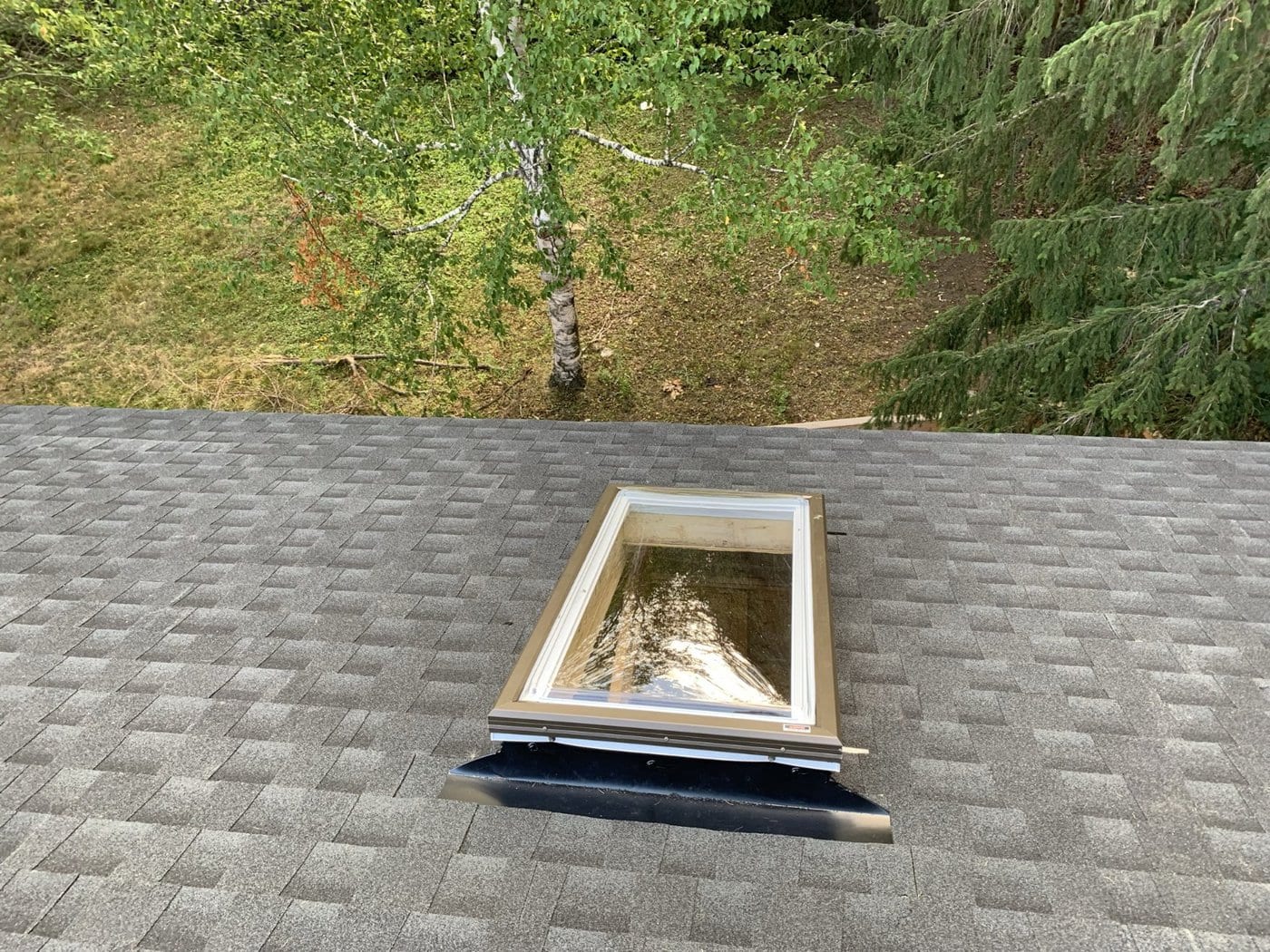
Flashing seals the joints around chimneys, skylights, vent pipes and walls. When it bends, rusts or the sealant cracks, water gets in. Flashing is one of the most common sources of roof leaks.
7. Overflowing eavestroughs
Blocked gutters push water back under the shingles and behind the fascia. If water spills over the edge during rain, the eavestroughs and downspouts need attention.
Where roof leaks usually start
- Chimney and wall flashing
- Skylights and their flashing kits
- Plumbing vent pipes and exhaust vents (cracked rubber boots are common)
- Roof valleys, where two slopes meet and water runs fastest
- The eaves, where ice dams form in winter
- Seams, drains and edges on flat roofs
What to do while you wait for the roofer
- Protect your belongings: move furniture and electronics, and put a bucket and towels under the drip.
- Relieve a bulging ceiling carefully: if water is pooling above drywall, a small hole at the lowest point lets it drain into a bucket instead of bringing the ceiling down. Stay away from light fixtures and turn off power to that area if water is near wiring.
- Take photos: pictures of the stain, the attic and any outside damage help with insurance and with finding the source.
- Stay off the roof: wet and icy roofs are dangerous. Let a professional do any tarping.
How we find and fix the leak
Water can travel along roof boards and rafters before it drips, so the leak is often not directly above the stain. Our team traces the path from inside and outside, then fixes the real cause, whether that is a flashing repair, new shingles or a vent boot. If the roof is old and leaking in several places, we will tell you honestly when a roof replacement makes more sense. Our guide on roof repair vs. replacement explains how to decide.
Roofing Pros offers 24/7 emergency service for active leaks. Learn more about our roof leak repair service and general roof repairs.
Frequently asked questions
Can a small roof leak wait until spring?
It is not a good idea. Small leaks get bigger with every freeze and thaw, and wet insulation and wood can lead to mould and rot. Temporary or permanent repairs can be done in winter.
Why does my roof only leak in winter?
Leaks that show up only in winter are often caused by ice dams at the eaves or by condensation from poor attic ventilation, not by a hole in the shingles. Our fall roof checklist covers how to prevent both.
Will home insurance cover a roof leak?
Sudden damage, such as from wind or a fallen tree, is often covered. Leaks caused by age and wear usually are not. Check your policy and document the damage early.
Leaking roof? Call us today
We repair roof leaks in Toronto, North York, Scarborough, Vaughan, Mississauga and across the GTA. Call 905-252-PROS (7767) any time, or request a free estimate online.